
Autonomous And Smart Farm Machinery: The Next Era Of Mechanization
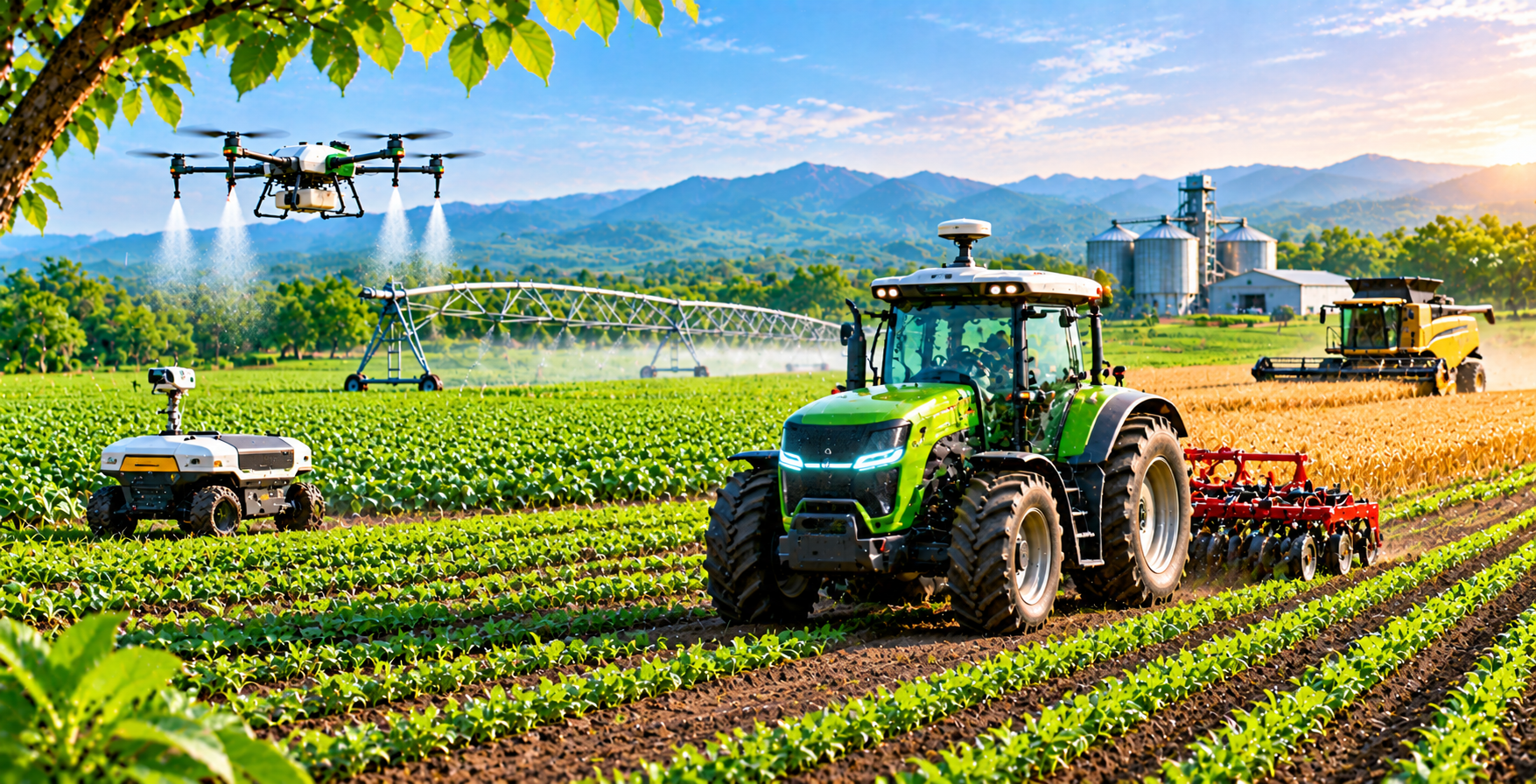
Agricultural mechanization is evolving through GPS guidance, digital controls, automation, robotics, and smart implements. These technologies can help improve operational consistency, reduce repetitive tasks, and support more precise field work. Guidance systems may assist with straight passes and field coverage, while machinery sensors can provide information about operating conditions, fuel use, or implement performance. Robotics and autonomous equipment are also being developed for selected planting, weeding, monitoring, and harvesting activities.
The suitability of smart machinery depends on the farm’s scale, crop system, field layout, labor availability, and service environment. Equipment that performs well on large, uniform fields may not be practical for fragmented holdings or irregular plots. Soil conditions, crop spacing, terrain, and local climate influence performance. The decision should consider the whole operating system: compatible implements, transport, storage, spare parts, trained operators, and maintenance support.
A careful investment appraisal is essential. Purchase price is only one component; fuel or energy, repairs, depreciation, software, insurance, and downtime also affect costs. For some businesses, hiring machinery services or sharing equipment may be more economical than ownership. Demonstrations and pilot use can reveal whether a machine meets actual needs under local conditions. Safety procedures must remain central, particularly around moving equipment, automated functions, and people working in the field.
Smart machinery can contribute to more timely operations and better records, but it does not remove the need for skilled management. Operators must understand settings, limitations, and safe procedures. Jadeed Zaraat can assist stakeholders with needs assessment, project feasibility, equipment selection criteria, and coordination with suppliers or technical partners. The next era of mechanization will be shaped not by the most advanced machine alone, but by technologies that are reliable, serviceable, economically justified, and suited to the farming context.