
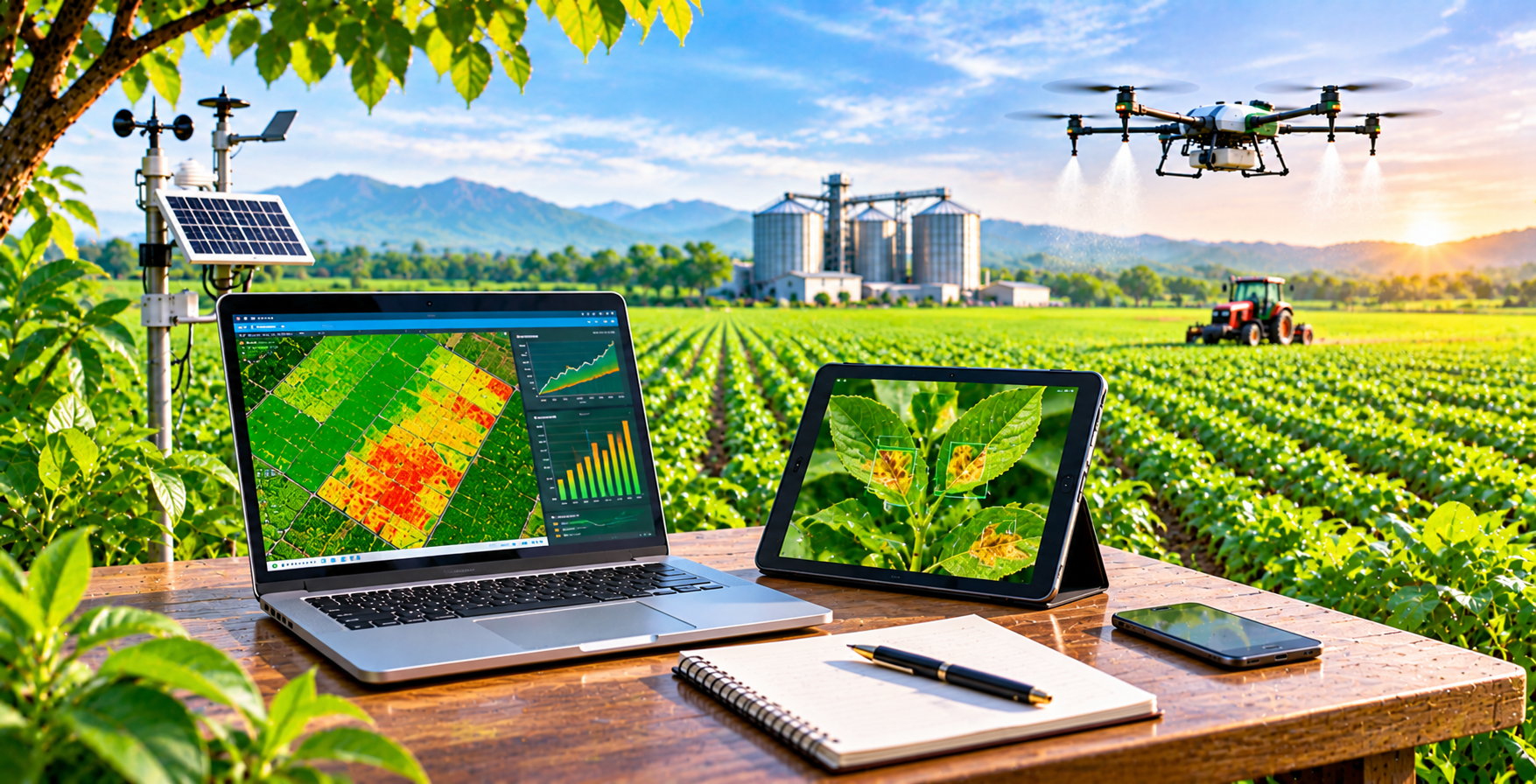
Artificial Intelligence In Agriculture: From Crop Insights To Smarter Agribusiness
Artificial intelligence is becoming a useful decision-support tool across the agricultural value chain. By processing large volumes of field observations, weather information, satellite imagery, soil data, and market signals, AI systems can help identify patterns that may be difficult to see through manual analysis alone. Potential applications include crop health assessment, yield estimation, pest and disease alerts, crop planning, input optimization, and agribusiness forecasting. These tools are most valuable when they complement the knowledge of farmers, agronomists, and other specialists rather than replace their judgement.
For farm-level use, AI-supported recommendations must be grounded in local realities. Crop variety, soil conditions, sowing date, irrigation availability, pest pressure, and regional climate all influence whether a recommendation is appropriate. Data quality is therefore essential. Inaccurate records, incomplete imagery, or generalized models can produce misleading outputs. Users should validate insights through field scouting, reliable testing, and qualified technical advice before making important operational decisions.
AI can also strengthen business processes beyond the farm. Agribusinesses may use it to organize documents, analyze procurement trends, forecast demand, support customer service, and improve logistics planning. Food processors may explore predictive maintenance, quality monitoring, and production scheduling. Consultancy teams can use AI to structure research and generate preliminary analyses, with expert review applied to conclusions and deliverables.
Responsible adoption requires attention to privacy, data ownership, cybersecurity, transparency, affordability, and staff capability. Small and medium-sized enterprises may begin with focused use cases that solve a measurable problem instead of investing in complex systems immediately. Jadeed Zaraat can help stakeholders assess opportunities, define practical requirements, coordinate relevant expertise, and evaluate outcomes. The future of agricultural AI will not depend on technology alone; it will depend on trustworthy data, human expertise, and solutions that create demonstrable value for producers and businesses.